




Speech Day address

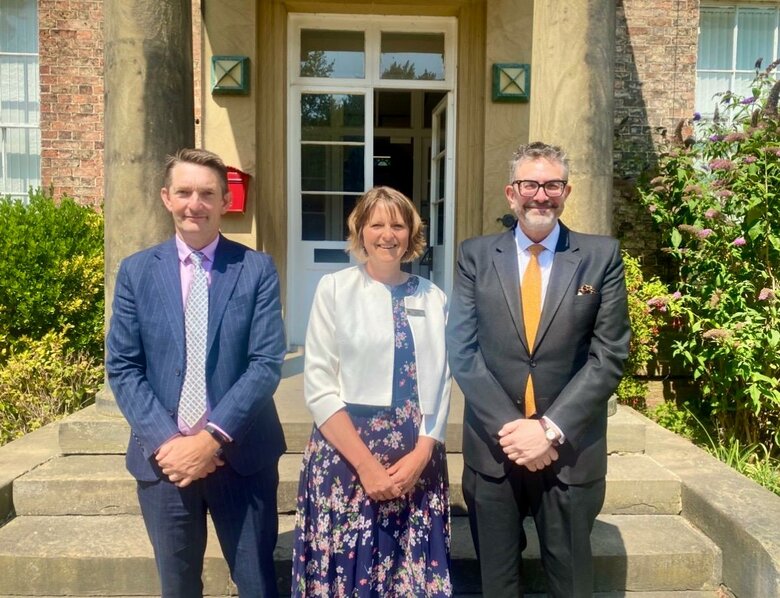
Ripon Grammar School — 16 July 2026
Justin Kitson KC
Thank you, Headmaster, for inviting me back. It’s great to be here. Although nothing has aged me quite so much as receiving an invitation to give the address at my old school’s speech day.
Now, I must begin with a preliminary warning; I'm a barrister. Which means I am professionally trained to talk for far too long about things nobody wants to hear. So, if at any point you feel your eyes glazing over, please don't worry. That is entirely normal when I speak. It happens to judges too. The difference is they have to pretend to stay awake.
I left RGS in 1993. Like you, I can say that I was fortunate to have been to a great school. Believe me, I know it. I arrived here in September 1989 from a comprehensive. Thirty years or so later, I remain grateful for the education and grounding I received here.
I'm accompanied here today by Caroline Smith, née Dodsworth, who was Head Girl in 1992 to 1993. I am sure it is no different today, but back then, the Head Girl was basically the person who was good at everything while the rest of us were still trying to work out how to tuck in our shirts. Caroline was, and remains, someone of huge value in my life, even if we don’t much see one another. The fact that she agreed to come back here with me today to endure the heat in this sports hall is either a great testament to our friendship or a serious lapse in her otherwise impeccable judgment.
So, what have I been getting up to since 1993? Of course, the more interesting question is what I was getting up to between 1989 and 1993, but the Headmaster may not welcome me elaborating too much on that. "Kitson, do stop talking" and the fact I managed to get a detention when sitting my ‘A’ Levels must suffice.
After Ripon I went to St. Andrew’s university to study medieval history. It taught me that almost nothing is genuinely new, no matter how sparklingly it has been packaged. Power, ambition, conflict, certainty in one's own opinions and people living in magnificent self-delusion were all flourishing quite happily in the twelfth century, as they seem to do in public life today.
From there I studied law in London and became a barrister. Some years later I had the privilege of serving as Chairman of the Young Bar, which took me all over the world. I discovered that people everywhere are convinced they live at the centre of the universe. They are, of course, all mistaken; as everyone here knows, Yorkshire is.
Over the last 25 years I've argued some fascinating cases, acted for rock stars, pop stars and the occasional person who behaved like one. Highlights have included taking on Sir Bob Geldof to challenge his ownership of copyrights and royalties in the Boom Town Rats’ hit, “Tell Me Why I Don’t Like Mondays”, advising Toni Basil of “Hey Mickey” fame, and more recently acting for Artemas Diamandis in a dispute with Adele’s music manager. Not to mention getting to know YungBlud. In 2022, I argued, and won, a case in the Supreme Court before 7 absurdly bright Supreme Court Judges; a case that has made no small contribution to ensuring 5G reception for all of your mobile phones.
Somewhere along the way I was appointed King's Counsel. It sounds very grand, but it mostly means the cases become harder; the hours become longer. The moment I received my letters-patent signed by the King and new title at the Palace of Westminster, wearing a full-bottomed wig, breeches, buckled shoes and enough lace to furnish a small stately home, was awe-inspiring but slightly ridiculous. Perhaps the scrapes I had at Ripon prepared me for keeping a straight face when it really mattered. Every now and then I’m still wheeled out in such clobber.
My career has not followed anything resembling a carefully designed plan. If your future feels uncertain, don't worry. You're not supposed to have it all worked out. Most of us don't. Interesting lives seldom begin with a perfect plan.
While my career has given me a living, it isn't what has given me a life. Looking back over the last thirty-three years, I realise that the foundations of my life were laid here at Ripon Grammar School. These were laid through three things: music, friendships and values.
When I was at Ripon, I studied the piano to Grade 8 and sat the exam on the big piano in the assembly hall. I remember the exam starting with me having to remove paperclips that had somehow found their way onto the piano strings in advance of assembly hymn singing the following morning. It wasn't, perhaps, the ideal start.
At the time, music was something I loved. But it sat at the edge of what I imagined my future would be. Music seemed just a hobby; something not “sufficiently serious”.
When I moved to London in 1998, I closed the piano lid, metaphorically speaking. Life became busy. Law took over. I assumed that musical movement had ended.
Then, eight years later, I found myself studying with Professor Ian Jones at the Royal College of Music. That led me to performing Brahms and Beethoven at the World Piano Conference in Serbia … a wonderful experience. I suspect I played more wrong notes than the conference had heard during its entire history. All I can say is, don’t be afraid to hit a few bum-notes in pursuit of your passions.
But the things you think you've left behind have a remarkable habit of waiting patiently for you. Music had by then become something far more important than performance. It became the constant in my life. It has brought joy during happy times and comfort during difficult ones. It has introduced me to people I would never otherwise have met, taken me to places I never expected to go, and even led me to learn German late in life despite being rubbish at languages when I was a pupil here.
So, if there is something you genuinely love, don't be too quick to leave it behind simply because the world tells you to become serious. The things that bring you joy now will become the things that sustain you at forty, fifty and beyond.
And if that happens, you'll probably recognise, as I did, that it all started here. Perhaps with a teacher who noticed something in you before you noticed it yourself. Perhaps with an opportunity to have a go. Or perhaps simply because this school quietly gave you permission to be curious about something beyond the syllabus or which wasn’t aimed at maintaining school rankings. Never underestimate the value of that.
But it isn't only the things you love that stay with you. It's the people.
I mentioned Caroline at the beginning. I didn't ask her to come back today simply because she had been Head Girl. I asked her because, more than thirty years later, she remains one of the people who matter most to me. We don't see each other nearly as often as we should. Life has a habit of getting in the way. But real friendship has remarkably little interest in calendars.
The same is true of a number of the people I sat beside or before in classrooms here. The people I shared sandwiches with, copied homework from, and got into precisely the right amount of trouble with are still among my closest friends today. And I don't mean in the Facebook sense of collecting hundreds of names on a screen and being reminded of their birthdays by an algorithm. I mean the real thing. The people who know your strengths, your weaknesses and your vulnerabilities, and who appear when you need them without being asked.
Here again, I draw on something this school gave me: the deeply unfashionable idea that you should be more interested in other people than you are in yourself. Back in Mrs Chadwick's economics class, we designed an RGS anniversary mug to raise funds for the Old Riponians — quite possibly the most commercially successful thing with which I have ever been involved. When I’m in the North, Mrs Chadwick and I still meet to talk about operas we've seen and our families. Which tells you everything about the relationships this school can create. In chambers in London, I drink my morning cup of Yorkshire Tea from that very RGS anniversary mug.
Life, as some of you will already have begun to discover, is not a smooth journey. There are wonderful moments when everything seems possible, and there are days when the ground disappears beneath your feet. During those times, the clever arguments don't work. Professional titles don't matter. Nobody asks how many A grades you got in your GCSEs or A Levels or whether you became King's Counsel.
What matters are the people who know you. Not the person you've become, but the person you have always been. The friends who still call you by your school nickname. The people who are not remotely impressed by who you have become, but who care deeply about whether you're all right.
It has not passed me by that, at a Speech Day, one is expected to talk about academic success. And I certainly wouldn't discourage that. Exams worked out reasonably well for me, and I have just handed out prizes recognising the brilliant successes of so many of you.
But if you were to ask me what has really carried me through life, it would not be exam results, university degrees or professional titles. It would be values.
Life has a habit of teaching us what really matters. There are moments of great joy, but there are also moments of profound sadness. For me, those moments came when my family lost, in succession, my nephew and then my sister. What sustained me was not certificates hanging on a wall or another line on my CV. It was people.
One was my RGS friend Dr Laura Short. At three o'clock one morning, when sleep simply wasn't possible as a result of one of these terrible family tragedies, she marched me through the streets of York and around the Minster. She didn't have magical words. She didn't solve anything. She simply gave me the greatest gift one person can give another: her time, her kindness and her presence.
Looking back, I realise those qualities were not accidental. They were the values we had begun to learn here, often without recognising it at the time.
The idea that hard work matters. That kindness is not weakness but strength. That curiosity is worth following. That we should stand up for people who cannot stand up for themselves. And that it is better to be decent than clever, although if you are fortunate enough to be both, so much the better.
And perhaps most importantly, a life spent looking outward is richer than a life spent looking into the mirror, or into the front-facing camera of an iPhone.
When I left this school, I thought it had given me an academic foundation. Now I realise it gave me something much greater than that. It taught me how to think rather than what to think. It taught me to question evidence, to change my mind when the evidence changed, to solve problems, and not to be frightened of not knowing the answer straight away.
So, whether you are just beginning your journey here, about to start your GCSEs, in the middle of your A levels, or about to leave this school for pastures new, I hope you will be ambitious. Will work hard. Will aim high. But also, be infused with curiosity and kindness, be able to learn from things that haven’t gone right and be brave enough to care about something beyond yourself.
When people ask me about my life since leaving Ripon, they usually ask about the career: the Supreme Court, becoming King's Counsel, or some of the more unusual people I've met along the way.
Those have all been privileges. But academic expectation is not the only reason I am grateful to Ripon Grammar School. It gave me a passion for music that has lasted a lifetime. It gave me friendships that have endured for more than thirty years. And it gave me values that have carried me through some of the happiest days of my life and some of the hardest.
When I walked into this stifling hall today, I thought I was back in a place that gave me an education. I leave reminded that it gave me something much greater than that.
Headmaster, thank you for inviting me home.
JUSTIN KITSON KC
Ripon Grammar School, 16 Clotherholme Road, Ripon, North Yorkshire, HG4 2DG
Tel: 01765 602 647
E: admin@ripongrammar.com


