




The career switch that sparked a mission to help beat dementia


Former RGS governor Mark Avery changed career once his youngest child left for university. Retiring from his role as a tax partner at KPMG, he studied psychology at Durham University and has recently written a book on how to avoid dementia
“I RECENTLY visited a friend whose wife had just been diagnosed with Alzheimer’s dementia who confided to me ‘This is not the woman I fell in love with and married’. This wasn’t my friend succumbing to self-pity or despair but was a simple statement of fact; and it was all the more powerful for that.”
Dr Mark Avery is a dementia researcher and honorary fellow at Durham University and his short anecdote is one that many will recognise.
According to the Alzheimer’s Society, there are nearly one million people living with dementia in the UK today and, with an ageing population, this is set to rise to 1.4 million by 2040.
“Everyone knows someone—parent, grandparent, sibling, friend—who is affected by this terrible disease and everyone fears it happening to them” says Mark. “This is why I decided to write a practical guide on how to avoid it.”
Mark - who was an RGS governor from 2012 to 2019 - and his wife Marion are long-time residents of Carthorpe, near Bedale in North Yorkshire. Their three children, Jack, Sian and Kyle, left RGS in 2011, 2013 and 2015.
A former tax partner at KPMG, Mark explains “Back in 2014, when my youngest was starting university, I decided to make a radical mid-life career change. Having always had a deep fascination with the brain, I applied to study psychology at Durham University. Now, 11 years later, I’m still there, having gained my doctorate in the factors helping to preserve healthy cognitive ageing.”
“My new book, Keeping Your Brain in Shape, was inspired by my research. I often hear the same question: ‘What can I do to prevent getting dementia?’ The good news is that there is a lot that can be done about it.” The Lancet Commission reported last summer that up to half of all dementia cases are preventable. Mark recognises that not many people will read Lancet Commission reports but very many people are frightened of dementia and may want to read about how they can prevent it ever happening to them.
“I’ve tried to write this book in a way that’s informative but also easy to read, with straightforward practical advice.” says Mark. “My idea was therefore to write it in the style of a travel guide so it could be read straight through, chapter by chapter, or alternatively, people could just pick the chapters of more interest to them—e.g., like having a travel guide to Scandinavia but just reading the chapters on Norway and Sweden. It’s written for a general public readership but with scientific cross references for those who’d like to know more about particular subjects.”
“Some of the areas covered by the book may be familiar” Mark acknowledges. “For example, there are some quite well-known contributory factors to dementia such as low levels of physical activity, poor sleep and unhealthy diet. However, much of the time, practical advice on what to do about these factors lacks detail and can be fairly unspecific. Often also advice may be offered without the valuable context provided by scientific research. For example, being encouraged to ‘do more exercise’ is not much use without knowing what it is exactly you should be doing and just how it will benefit you. Diet is another good example with no shortage of advice on the latest ‘wonder foods’ to beat dementia but should you really focus your whole dietary effort on individual, magical foodstuffs?”
Mark’s book provides fresh and practical insight into some of these more well-known areas but also offers advice in some new ones. In recent weeks, new research has suggested it might be healthy not to act your age and Mark agrees that there are cognitive health benefits from remaining curious about life and continuing to learn new skills. Also, he advises, it is vitally important to keep on top of those little things that tend to go awry as we get older, such as vision, hearing and tooth loss. “It’s very easy to say ‘it’s not that bad’ or ‘I’ll get around to it’ but these things really matter” Mark cautions. Keeping a wide circle of friends, staying hydrated and even breathing well are all subjects covered. Here are a few more recommendations from his book:
Physical Activity
Research going back over a decade shows that exercise grows the part of the brain responsible for episodic memory. This is so important because it is the brain region that tends to decline first and fastest in dementia. All physical activity is good; more is better than less, and some is better than nothing. Also, watch the amount of sitting down you do. Get up and walk around for 5 minutes at least every hour.
Sleep and Circadian behaviour
Being physically active will have knock-on benefits for your sleep. You can sleep too much as well as too little. For brain health, good sleep lies in a Goldilocks zone of more than 6 but not more than 9 hours. Try not to worry about your sleep; it changes as we get older. Also, if you find yourself acting more like a lark than an owl, don’t fight it. This happens. Adapt to your new pattern.
Diet
There is good evidence for the effectiveness of some ‘brain diets’, but you don’t need to become a food puritan. This applies to very moderate alcohol consumption too. Also, when you eat is as important as what you eat when it comes to brain health.
Social Networks
There is a tendency to prune our social networks to a few close friends and family as we get older. Resist that urge and keep a wide circle of friends and acquaintances. Evidence shows that this will help you to stay cognitively sharp.
Change, Challenge and Curiosity
Stay curious! Do not withdraw from the modern world or become afraid of new technology. Read and write. Diversify your activities and keep learning. Challenge yourself to try something new. There is much to choose from.
This is advice that Mark has taken on board himself as he contemplates a second book as well as planning further academic research at Durham.
*Keeping Your Brain in Shape: Little, Brown Book Group, £16.99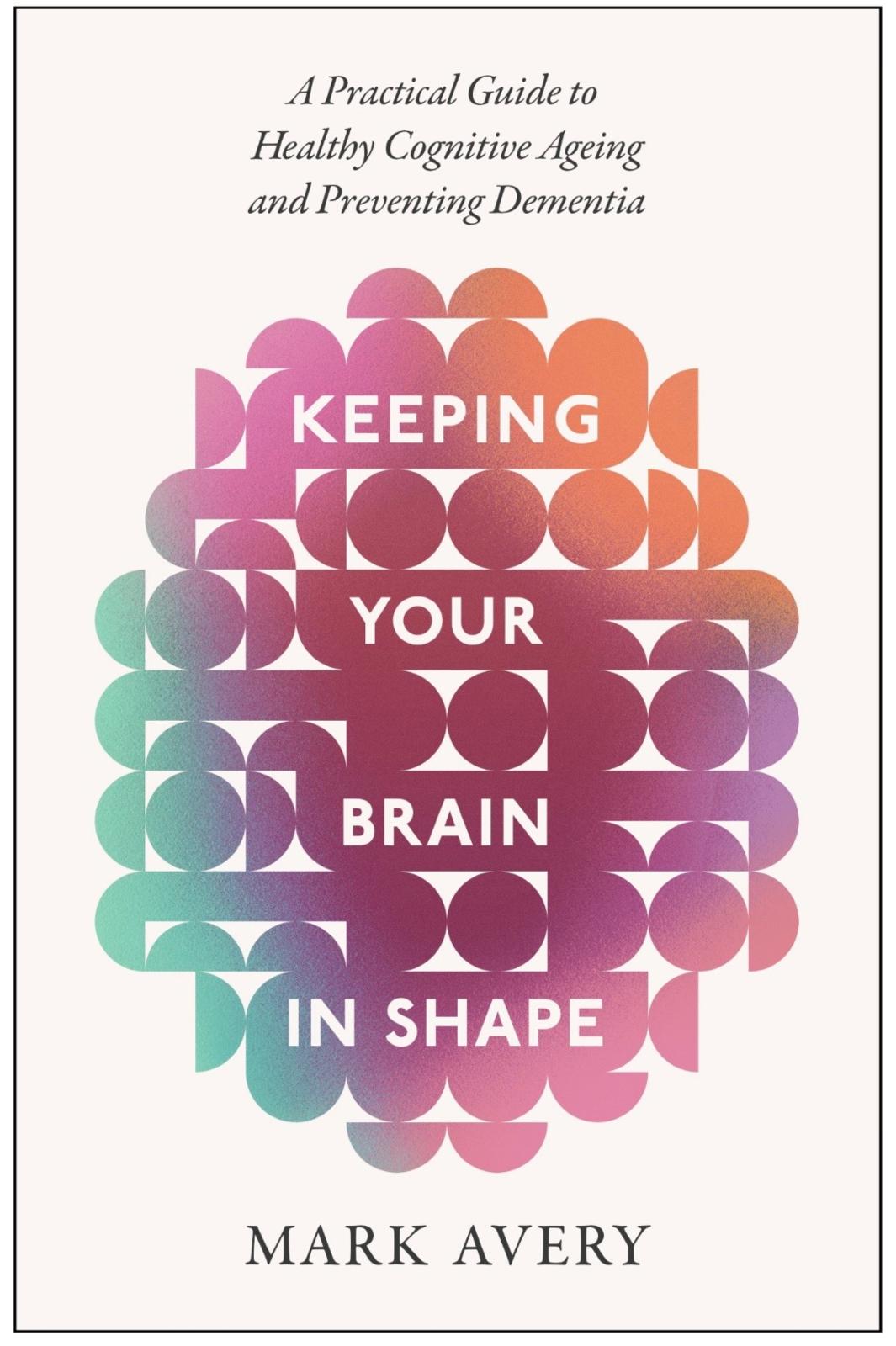
Ripon Grammar School, 16 Clotherholme Road, Ripon, North Yorkshire, HG4 2DG
Tel: 01765 602 647
E: admin@ripongrammar.com


