




Finding poetry in the chaos of noise and the refuge of silence

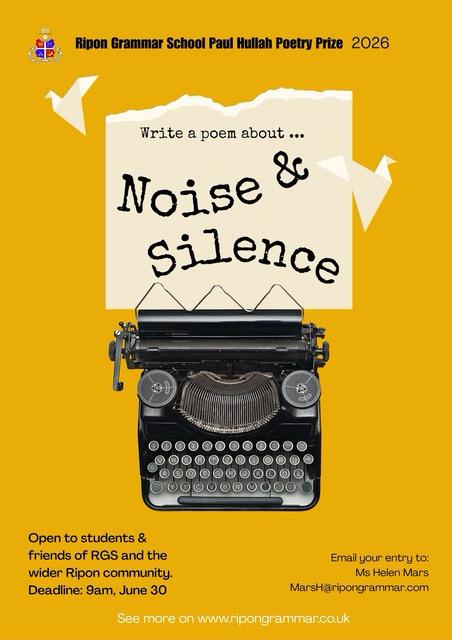
Budding poets are being encouraged to find their voice with the launch of Ripon Grammar School’s 2026 poetry competition.
This year’s compelling theme is ‘Noise and Silence’, with entrants invited to reflect on the tension between the clamour of modern life and the restorative power of silence.
Now in its twelfth year, the popular competition continues its tradition of celebrating poetry across generations and the wider community.
Founded by former RGS student Dr Paul Hullah, a professor of poetry at Meiji Gakuin University in Tokyo, the highly regarded literary award has grown to attract hundreds of entries from students, staff, past pupils, parents, Ripon residents and friends of the school every year.
Dr Hullah is challenging this year’s writers to consider how sound and stillness shape human experience.
He describes modern life as dominated by constant noise: social media notifications, rolling headlines, polarised opinions, performative politics and the relentless pressure to react.
“It’s exciting; it’s exhausting,” he says. “But when we want respite and refuge from that urgent uproar, there is always poetry…”
He encourages budding poets to explore both personal experiences and wider philosophical or social questions, considering silence as a place of refuge, reflection and meaning, while also examining the energy, disruption and chaos of noise.
Dr Hullah points to poetry’s long fascination with the relationship between sound and stillness, from the tranquillity of Romantic landscapes to the fragmented voices of modern urban life, reminding entrants that: “What stays unsaid can mean as much as what is said.”
He draws particular inspiration from Romantic poet John Keats’s famous line, ‘Heard melodies are sweet, but those unheard / Are sweeter,’ alongside Eighties electronic band Depeche Mode’s lyric ‘Words like violence, break the silence’.
Poems may be written in any style or form, though entrants are encouraged to keep their work concise, with the advice that ‘less is more’.
Previous competitions have produced a wealth of striking and imaginative work from both students and members of the wider community, with winners and highly commended poets praised by Dr Hullah for their originality, emotional insight and powerful use of language.
Organisers hope this year’s thought-provoking theme will once again inspire writers of all ages to reflect deeply, write creatively and discover what can be heard amid both the noise — and the silence.
Ripon Grammar School, 16 Clotherholme Road, Ripon, North Yorkshire, HG4 2DG
Tel: 01765 602 647
E: admin@ripongrammar.com


