




Geographers explore the Holderness coast

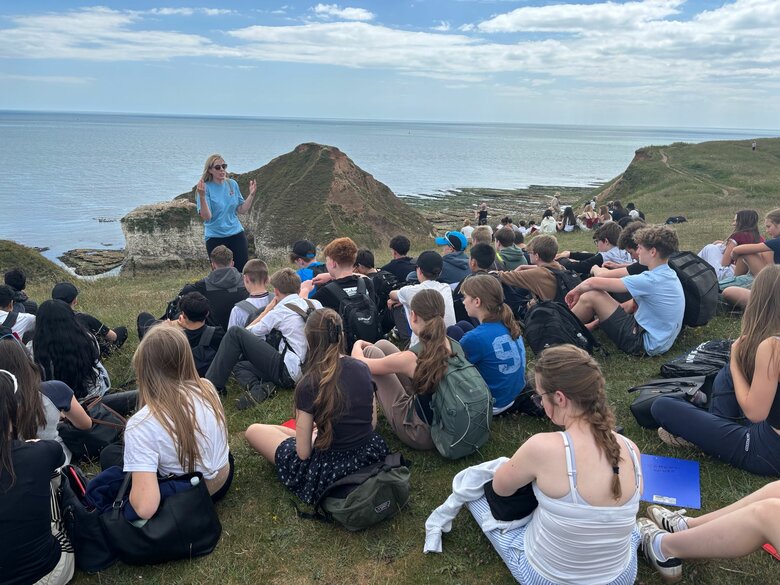
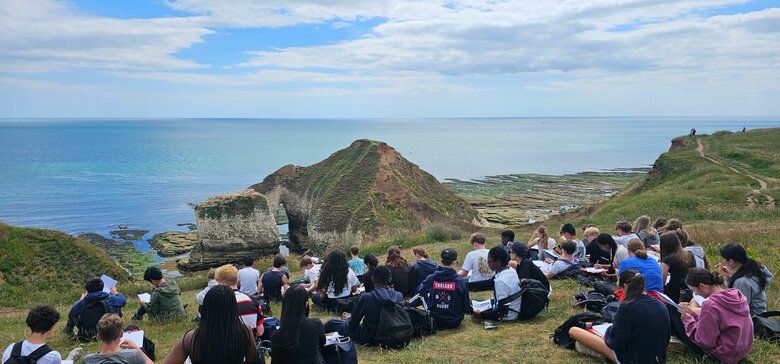
YEAR 9 geographers enjoyed an engaging field trip to Flamborough Head and Bridlington, where classroom learning about coastal erosion and sea defences was brought to life.
During their visit to the spectacular Holderness coast, students investigated the impact of powerful waves on the landscape at Flamborough Head. They explored how the high-energy coastline continues to shape the dramatic chalk cliffs through ongoing erosion.
The group also visited the iconic chalk headland, taking in its impressive arch, caves and distinctive bedding planes. Students learned about the famous rock formation affectionately known as 'Flamboroughsaurus’, so named because its outline resembles a giant dinosaur with a long tail, arched back and jaw stretching into the sea.
In Bridlington, students examined a range of coastal management strategies designed to protect the shoreline. They investigated the sea wall and rock armour before measuring how effectively the wooden groynes trap beach material carried by longshore drift. The fieldwork helped students understand how these defences work together to reduce wave energy and slow coastal erosion.
Adding to an already memorable day, students were treated to an unexpected wildlife encounter when several dolphins were spotted swimming close to the shore at Bridlington beach. The surprise sighting delighted the group and provided a special end to a day of hands-on geographical learning.
The trip provided an excellent opportunity for students to apply their geographical knowledge in a real-world setting while developing valuable fieldwork and data collection skills.
Ripon Grammar School, 16 Clotherholme Road, Ripon, North Yorkshire, HG4 2DG
Tel: 01765 602 647
E: admin@ripongrammar.com


