




RGS chemists find formula for success

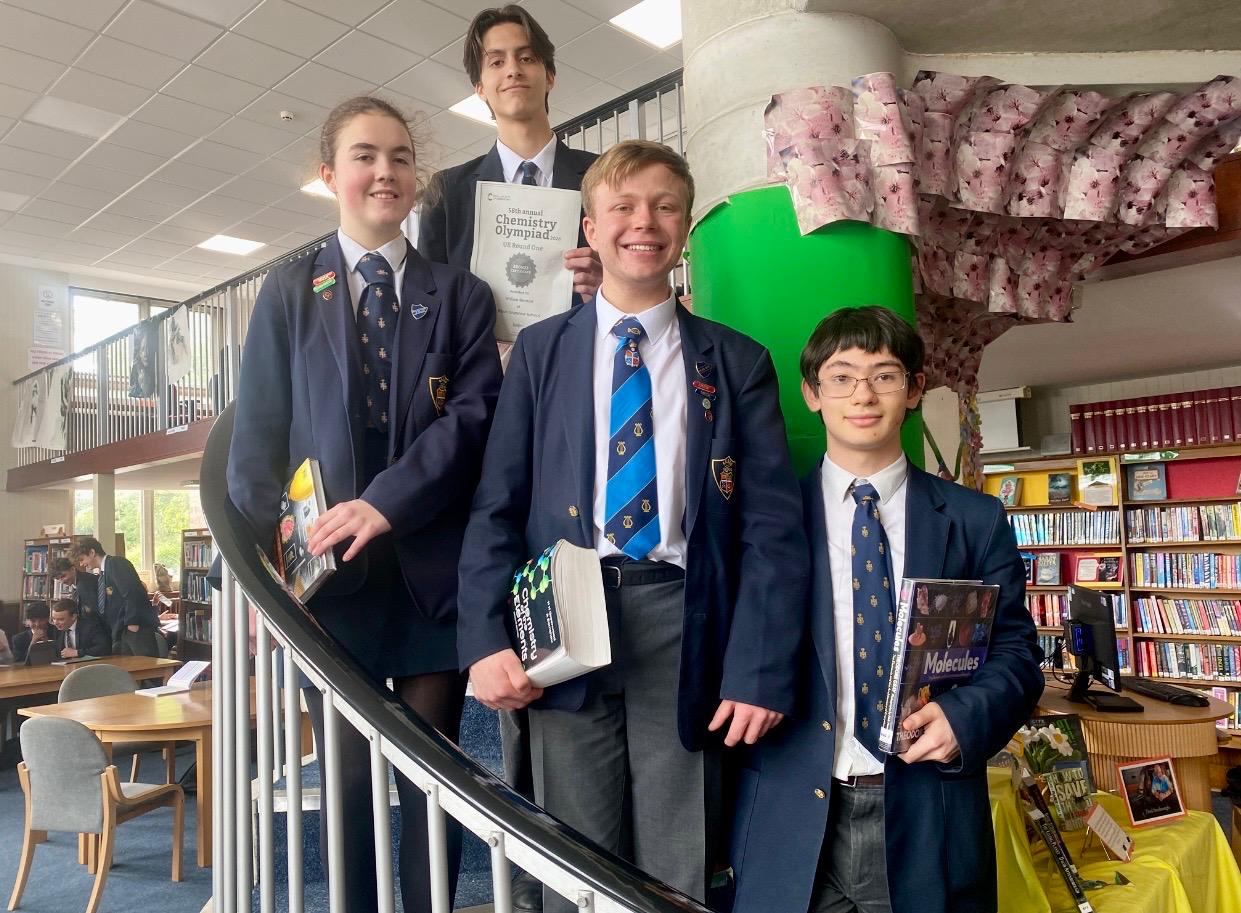
NINE budding Ripon Grammar School chemists shone in a prestigious international science competition.
The gruelling challenge consisted of a two-hour written paper full of chemical conundrums, well beyond A-level standards, considered one of the most demanding and prestigious science competitions for sixth form students in the country.
Up against a record record 17,241 entrants from 1,153 schools throughout the UK, three RGS students were awarded coveted gold certificates in the UK round of the 58th International Chemistry Olympiad.
This places them in the top 8.5% of candidates nationally who scored 38 marks or above, with one RGS student, William Keens, scoring a remarkable 19 marks above that, with a score of 57.
Also particularly impressive was Year 12 student Wynn Williams, who secured a gold award with his score of 40, despite competing against students who have completed an additional year of chemistry study, with the paper designed primarily for Year 13 students.
Shashank Jayaraj was the third RGS pupil to attain gold, with an outstanding score of 42.
Six further RGS students, who all volunteered to sit the test, were among the impressive 25.7% of entrants who gained silver and 36.5% who achieved bronze awards against national competition of the highest standard.
Other award winners were Hans Chiu (26), Hyung Hwang (24), who gained silver, and Lucas Joseph (19), William Renton (15), Katherine Thody (13) and Samuel Stead (13), who picked up bronze.
Students Amelia Briggs, Joyce Fung, Aiden Ng, Hannah Wilson, Abigail Keats and Niamh Mulligan also deserve recognition for taking part in such a challenging national competition.
Top scorer William Keens, who studies maths, further maths, chemistry and physics, said: “I am very pleased with my score.”
William, 18, from Easingwold, hopes to study mathematics at Cambridge University and balances his academic studies with running, piano, saxophone and acting.
Year 12 student Wynn, 17, from Harrogate, studies maths, further maths, Chemistry and physics and hopes to study mathematics or computer science at university.
Reflecting on the competition, he said: “The challenge was tough and the most challenging part I found was that there were some knowledge points that I didn’t come across and I had to derive myself or even just guess.”
He added: “I felt really impressed when I saw it because I was only aiming for silver before I took it. I’m satisfied by this score for now, but I will try to push further to at least the second round next year.”
Katherine Thody, who hopes to study medicine, described the Olympiad as difficult but added that she greatly enjoyed the challenge.
Alongside her studies in maths, biology, chemistry and history, Katherine serves as the school’s community officer, volunteers as a Young Leader with Brownies and works part-time locally.
Lucas Joseph, also aspiring to study medicine, said: “For me, it was the most challenging paper I have ever sat. The questions tested your understanding on topics beyond A-level.”
Despite this, he was delighted to achieve a bronze award after persevering through every question.
William Renton, from Kirkby Malzeard, who studies chemistry, biology, music and maths, was similarly surprised by his success.
William hopes to study medicine and is heavily involved in music, climbing, Scouting and outdoor activities.
He said: “It was a massive surprise to have been awarded the bronze level, having only done the first few pages of the challenge! It was a great test of wider chemistry concepts, and I’d love to do it again next year.”
The Royal Society of Chemistry describes the Olympiad as an opportunity for students to develop critical problem-solving skills, think creatively and experience the kind of chemistry encountered at university and beyond.
This year’s paper paper opened with a question about pee in the pool, a nd went on to feature questions on topics such as isocyanides, compounds in henna tattoos and minerals. Paddington, the UkChO’s official mascot, even made an appearance in a question about isomers found in carrots.
Congratulations to all students who took part in this year’s competition, an excellent set of results.
A
Ripon Grammar School, 16 Clotherholme Road, Ripon, North Yorkshire, HG4 2DG
Tel: 01765 602 647
E: admin@ripongrammar.com


